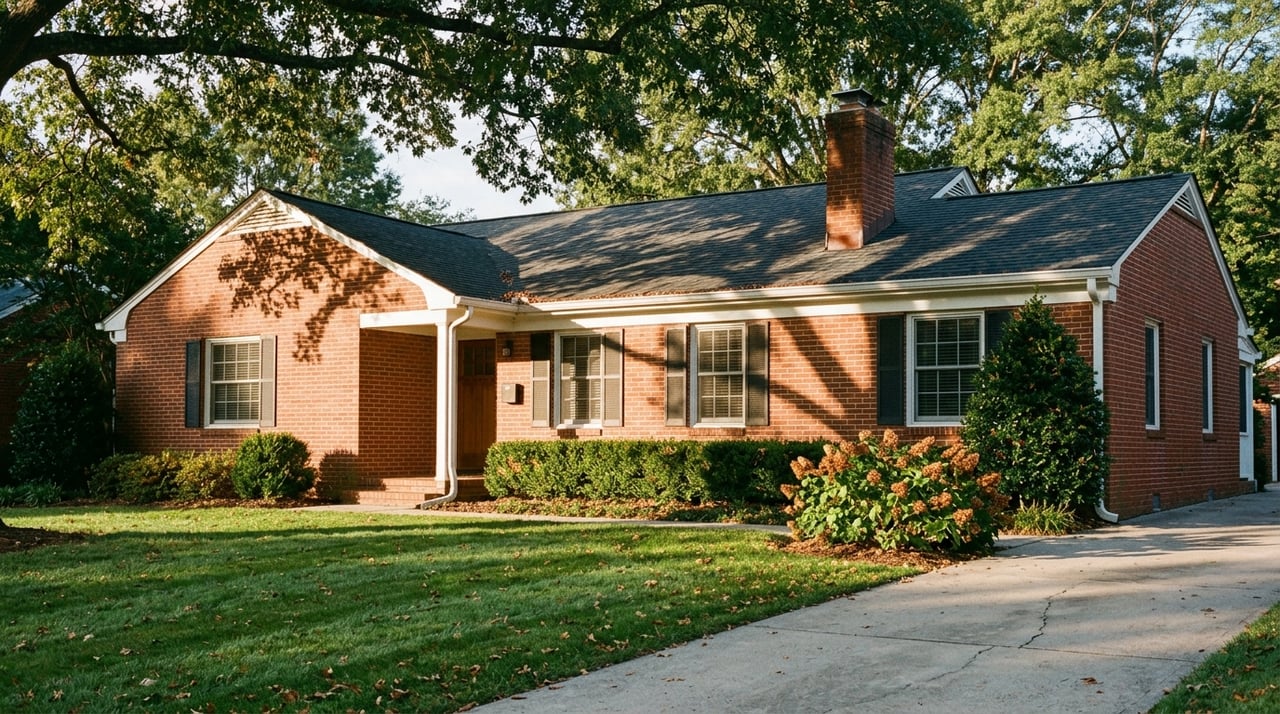
Ask a seller on a two-acre lot off River Road or Glen Mill Road whether Montgomery County requires a septic inspection before closing, and most will say no, because they checked. They are right. The county has never put that requirement into its code. They are also about to find out that it does not matter, because the contract they are about to sign requires it in every way that counts.
This is the kind of gap that trips up longtime homeowners more than anyone else. If you have lived on a well and septic system for twenty or thirty years, you have never had a reason to think about how Maryland licenses the people who inspect it. You are about to.
The Six Counties That Wrote It Into Law, and the One That Didn't
Several Maryland jurisdictions, including Anne Arundel, Baltimore, Carroll, Frederick, Harford, and Queen Anne's counties, require a certified septic inspection before a property can change hands. It is county ordinance, enforced by the local health department, with a failing system triggering mandatory repair before settlement can occur.
Montgomery County is not on that list. There is no county statute that forces a septic or well inspection at the point of sale here. For most of the county that fact is irrelevant, because most of the county is on public water and sewer through WSSC, the City of Rockville, or the City of Poolesville. But Potomac's estate section, the large parcels along River Road, Glen Road, Piney Meetinghouse Road, and Glen Mill Road, was built on private wells and septic systems long before public lines reached that far out, and much of it still runs on them today.
So the county's silence does not mean less scrutiny for a Potomac seller. It means the scrutiny moved somewhere else: into the contract itself.
Where the Requirement Actually Lives
Nearly every Montgomery County residential sale runs on forms drafted by the Greater Capital Area Association of REALTORS, the trade group that writes and updates the standard contracts used across Montgomery County and DC. Their Montgomery County Jurisdictional Addendum includes a plain checkbox asking whether the property is on private well or septic. Check yes, and two more documents attach themselves to the file automatically: the Private Water Supply System Addendum and the On-Site Sewage Disposal System Addendum.
Those addenda are specific about what has to happen before settlement, not sometime during the listing period:
- A potability certificate for the well water, dated no more than 30 days before settlement, from a laboratory certified by the Maryland Department of Health and Mental Hygiene
- A septic report, also dated within that same 30-day window, from a company that has followed the Maryland Department of the Environment's standardized inspection procedure
- If either document comes back unfavorable, the seller is contractually on the hook to complete remedial action, at the seller's own expense, before settlement can proceed
No county inspector shows up to enforce this. The buyer's side does, because their lender will not fund without it and their own transaction can't close without it. It behaves exactly like a legal mandate. It just runs on paper instead of statute, which means the failure points are different too.
The Distinction That Changed in 2026
Here is where the paper trail gets sharper this year. Maryland's State Board of On-Site Wastewater Professionals maintains a public list of every individual authorized to perform septic services in the state. As of a registry update dated July 28, 2026, that list draws a hard line between two categories: people who hold an actual Property Transfer Inspection license under COMAR 26.31.01, and everyone else, who is merely "Registered" to perform general septic work like pumping or installation.
Only the licensed group can sign off on the inspection your contract needs. A registered pumper, even a good one who has serviced your tank for fifteen years, is not automatically qualified to produce the report your buyer's addendum requires.
The timing makes this worth flagging now rather than later. Many PTI licenses came up for renewal by June 30, 2026, a deadline that has already passed as of this writing. Some septic companies renewed without issue. Others, particularly smaller outfits that had been operating for years under the old registration system before the state formalized this two-tier structure, may have let a license lapse without realizing the distinction mattered. If you call the company that has always handled your property and they are registered but not licensed for transfer inspections, you have lost time you did not know you were spending, right when the 30-day settlement clock is the one deadline you cannot negotiate away.
Why This Lands Harder in Potomac Than Almost Anywhere Else in the County
Potomac's largest lots sit in RE-1 and RE-2 zoning, Montgomery County's large-lot residential categories, often without HOA restrictions dictating maintenance schedules the way a homeowners association might elsewhere. That freedom is part of what makes these properties desirable. It also means nobody has been checking in on the septic system's condition the way a managed community might.
Combine that with the profile of sellers we see most often on these streets: a homeowner who has lived in the house for decades, or an adult child coordinating a sale for a parent who no longer can, often managing the process from out of state. In that situation, nobody has thought about the septic tank since the last time it backed up, if ever. The inspection is not a formality. It is often the first real look the system has had in years, which raises the odds of something showing up that needs attention before a scheduled closing date can hold.
The Rebuild Question Hiding Underneath the Lot
There is a second layer to this that matters specifically for anyone eyeing a teardown or major addition on one of these parcels. Montgomery County designates water and sewer service areas by category, and some Potomac lots fall into what the county labels W-1, W-3, S-1, or S-3, meaning they are planned for eventual public service but do not yet have direct access to an existing main.
If you are on one of those parcels and need a new or replacement septic system, the county's Department of Permitting Services requires an exception from the Department of Environmental Protection before it will even consider the permit. And if that exception is granted, the permit that follows is typically an interim one, which means the owner is on the hook to abandon the well or septic system and connect to public service within a year of it becoming available, whether or not that timing is convenient.
For a straightforward resale this rarely comes up. For anyone planning to rebuild bigger on a Potomac estate lot, it is worth knowing before you are three months into a design process and discover the exception process adds weeks you did not budget for.
What This Actually Means for Your Timeline
If you are preparing to list a well-and-septic property in Potomac, the practical sequence looks like this:
- Confirm the company you plan to hire holds an actual Property Transfer Inspection license, not just a general registration, before you schedule anything
- Schedule the well and septic inspections well ahead of your target settlement date rather than exactly at the 30-day mark, since a failed test that requires remediation needs time you won't have if you wait
- If your lot sits near a W-1, W-3, S-1, or S-3 boundary and a rebuild is part of the plan, raise the DEP exception question with your agent and contractor early, not after a design is finalized
- Keep every certificate even if a contract falls through, since the next buyer's lender will ask for the same documentation again
None of this changes because Montgomery County chose not to write a septic law. It changes because the paperwork already does the same job, and paperwork rewards the seller who moves early far more than statute ever did.
A Few Questions Worth Asking Before You List
Does Maryland require a septic inspection for every home sale? Not statewide, and not in Montgomery County by county ordinance. The requirement here comes from the standard sales contract rather than the health code, which is why it still applies to nearly every Potomac well-and-septic sale in practice.
Who pays if the septic system fails the transfer inspection? Under the standard Montgomery County contract addendum, the seller is responsible for remedial action at the seller's own expense before settlement can proceed.
What if I'm not sure whether my lot is on a well and septic system at all? Older Potomac deeds and county water and sewer service records can settle this, and it is worth confirming before you price a listing, since it changes which addenda your contract needs from the start.
If you are weighing a sale on a Potomac property with a well or septic system, or trying to sort out what a rebuild might actually require on your particular lot, Betsy Taylor has spent years walking Montgomery County sellers through exactly this kind of preparation before a home ever hits the market. Let's Connect and get your timeline right from the start.