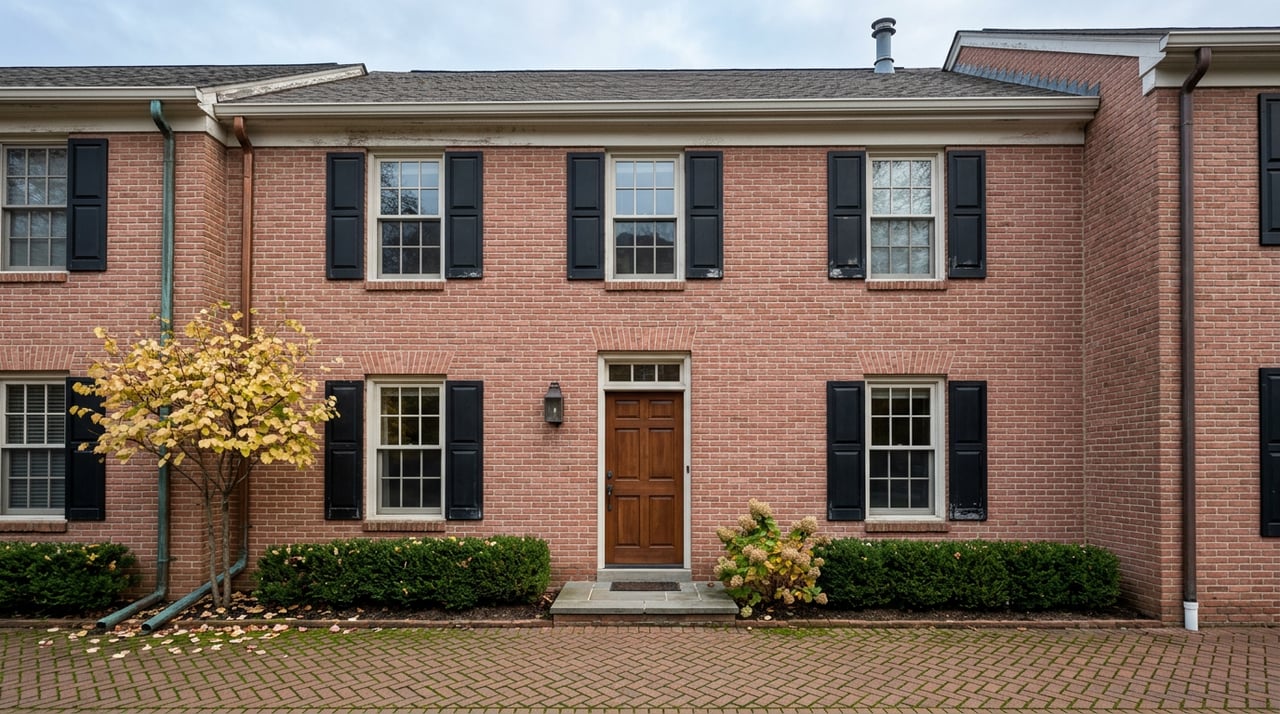
A seller in King Farm calls the community office to start the paperwork. She's been told, correctly, that Maryland requires a resale package before her condo can close, as FirstService Residential explains. She assumes one call gets her one document. What she learns instead is that King Farm runs on two associations, not one, and each has its own manager, its own fee, and its own clock.
That distinction rarely shows up until a seller is already three or four weeks into a listing, usually right after a buyer's lender asks a question nobody prepared for. It's worth understanding before you list, not after.
Which Statute Applies Decides the Clock
Maryland doesn't have one law governing association paperwork. It has two, and they don't run on the same schedule.
A condominium, meaning a property with a recorded declaration creating a condominium regime, falls under the Maryland Condominium Act, Title 11 of the Real Property Article. A homeowners association, the kind that governs townhome developments and single-family subdivisions with covenants but no condominium declaration, falls under the separate Maryland Homeowners Association Act, Title 11B. Confusing the two creates paperwork headaches. The Maryland Association of Realtors built check boxes into its standard contract of sale specifically to flag whether a property sits under one statute, the other, or both.
Here's how the two systems actually compare for a seller trying to plan a timeline:
| Condominium Act (Title 11) | HOA Act (Title 11B) | |
|---|---|---|
| Who issues the package | Council of unit owners or management company | Association or managing agent |
| Standard delivery window | Within 20 days of the unit owner's written request and fee | Within 20 days of the owner's written request and fee, up to a $250 cap |
| Delivery deadline to buyer | At least 15 days before closing | According to Patrick R. Beasley, at or before contract signing, or within 20 days after |
| Buyer's cancellation right | 7 days after receiving the documents | 5 days after receiving documents, if not delivered 5+ days before contract |
| Fee structure | $250 standard, rush fees up to $50 (14-day) or $100 (7-day), inspection fee up to $100 | Same fee caps, inspection fee capped at $50 |
Both statutes exist to protect a buyer from discovering, after they've committed to a purchase, that an association has unresolved litigation, a special assessment nobody mentioned, or reserves that don't cover what the roof will eventually need. For a seller, though, the practical takeaway is simpler: know which statute applies to your property before you assume you know what the timeline looks like.
Why King Farm Runs Two Clocks at Once
Most Rockville sellers deal with one association and one package. King Farm is structured differently, and it's worth naming exactly how.
King Farm Citizens Assembly, or KFCA, is the master association for every condominium in the community. But each individual condo building also belongs to its own sub-association with a separate property manager. King Farm Condominium, for instance, the five buildings along Watkins Pond Boulevard and Elmcroft Boulevard, is managed independently by Abaris Real Estate Management, not by KFCA itself. A seller in one of those buildings needs a package from KFCA and a separate package from Abaris, each with its own fee and its own processing time.
KFCA's own master package runs $125 and includes a resale certificate plus access to governing documents, with standard requests processed within 7 business days and rush requests available for an additional $50 in 5 business days or less. That's before the sub-association's package even enters the picture. Two associations means two invoices and two queues, and if either one is running behind, the whole closing waits on whichever is slower.
There's a related wrinkle worth flagging, though it cuts the other way for condo owners. KFCA's standard resale package for townhomes and single-family lots in King Farm includes an exterior compliance inspection, staff checking the home and lot from outside for code compliance without entering the property, and if that inspection turns up a violation, the seller can request an updated certificate once it's resolved. King Farm's own materials are explicit that this inspection step does not apply to condominium units. So a condo seller isn't dealing with a KFCA inspection on top of two packages, but is dealing with two packages instead of the inspection, which is its own kind of scheduling risk if either association's manager is backed up.
Contrast that with a single-family HOA elsewhere in Rockville, like Rockshire, where sellers order one resale package through the HomeWise portal and deal with one association from start to finish. Same city, same general 20-day statutory framework, but a materially different timeline depending on which community you're in and whether that community has a master-plus-sub-association structure layered on top of the base statute.
The Reserve Funding Law Nobody's Resale Package Mentioned Until Last Year
There's a second reason resale packages look different this year than they did two years ago, and it has nothing to do with King Farm's structure specifically. It applies to every condominium and HOA in Rockville, and in Maryland generally.
Since October 1, 2025, associations haven't just been required to have a reserve study on file. Under SB 63 and HB 292, signed into law in 2025, they've been required to adopt a funding plan and to actually deposit reserve contributions at the level their study recommends, by the end of each fiscal year. That's a meaningful shift from the earlier standard, which asked boards to obtain a study and share a summary with owners but didn't require them to fund it at the recommended level.
The reason this belongs in a conversation about resale packages rather than board governance is what happens when an association hasn't kept up. Underfunded reserves, SmartProperty says, can affect a building's eligibility for conventional financing through Fannie Mae or Freddie Mac, which means a buyer's ability to get a loan on a unit can hinge on numbers that live inside the same resale package Maryland law already required. A board can seek a documented hardship exception—CondoSignal says an association may deviate from full funding by a two-thirds vote with member notice for up to two consecutive fiscal years—but that exception itself becomes something a careful buyer's lender will want to see in writing.
Because the law took effect in October 2025, any Rockville association is now roughly a year into its first full budget cycle under the new funding requirement. A seller listing this fall is selling into the first stretch where a resale package reasonably ought to include not just "does a study exist" but "is the association actually funding it, and if not, why."
Before You List: A Short Pre-Listing Checklist
- Confirm whether your property sits under the Condominium Act, the HOA Act, or both. Two-tier communities like King Farm require packages from each layer.
- Identify every association involved and its manager. In King Farm, that means KFCA plus your building's own sub-association manager, which may not be the same company.
- Ask for the current reserve study and funding plan status before you list. Don't wait for a buyer's lender to raise it after you're under contract.
- If you're selling a townhome or single-family lot rather than a condo, budget time for a possible exterior compliance finding, since that inspection step is part of the standard HOA package in communities like King Farm.
- Order early. Standard packages can take up to 20 days under Maryland statute, and a two-tier structure effectively doubles that runway unless both requests go out on the same day.
What This Actually Changes for a Fall Listing
None of this means selling in King Farm or a similar Rockville community is harder than it should be. It means the paperwork has more moving parts than the phrase "resale package" suggests, and those parts run on separate clocks that don't wait for each other. A seller who treats this as one form to order the week before closing is the seller who finds out, mid-transaction, that a second association hasn't even started its own review yet. A seller who starts the process before the home goes live, confirms which statutes and which managers apply, and has funding-plan documentation ready, is the one whose closing date holds.
A Few Questions Sellers Ask
Does every King Farm home need two resale packages? Only if the home is a condominium. King Farm townhomes and single-family properties that fall solely under KFCA's HOA structure need one package. Condo owners are the ones dealing with both the master association and their building's sub-association.
What if my Rockville home isn't in a condo or HOA at all? Then this entire framework doesn't apply. Plenty of Rockville neighborhoods, particularly older single-family sections, have no association at all, and those sellers skip this step entirely.
How much should I budget in total? For a single-association property, plan on the standard fee cap of $250 plus any rush fee if you need faster turnaround. For a two-tier community like King Farm, expect to pay each association separately, so budget for both a master package and a sub-association package rather than assuming one fee covers everything.
If you're weighing a fall listing in King Farm or anywhere else in Rockville with an association attached, it's worth mapping out exactly which statutes and which managers apply before the home ever hits the market. Betsy Taylor has walked Rockville sellers through exactly this kind of paperwork chain more than once, and would be glad to help you get ahead of it. Let's Connect.
This article is general information, not legal, tax or financial advice. Consult a qualified professional about your situation.